Dozens of academics, environmental professionals and members of civil society have this week published an open letter to the Secretary of State at the Department of Energy Security and Net Zero, Miatta Fahnbulleh, arguing for specific conditions to be attached to licenses granted to the proposed Jackdaw and Rosebank oil and gas fields, which are currently under consideration.
The letter does not argue for or against the granting of licenses. Instead, it sets out the conditions the authors say must be in place in order to reconcile any development of these fields with the UK’s commitment to reach net zero by 2050.
In line with the “polluter pays” principle, the authors argue, fossil fuel companies – not consumers – should bear the cost of cleaning up the environmental harm caused by the products they sell. In the case of new oil and gas licences, this means that fossil fuel companies should be required to permanently store a rising fraction of CO2 emissions as a condition of receiving approval for new extraction.
“This is not a ‘get-out-of-jail-free card’ for the fossil fuel industry”, says Professor Myles Allen, Head of Atmospheric Physics at the University of Oxford and one of the lead authors of the letter. “We need to achieve deep and rapid emissions reductions in order to limit the worst impacts of warming and reach net zero by 2050. Rather, it is a way to deal with emissions that are ‘hard to abate’, such as those from cement and steel production, or aviation, where alternative processes and fuels are not yet available at scale. It is also the case that we cannot rely on the biosphere to passively soak up all of the emissions we are producing. This is why IPCC pathways and the UK’s Seventh Carbon Budget identify carbon dioxide removal (CDR) and carbon capture and storage (CCS) as essential if we are to reach net zero by 2050.”
In 2024 the UK government committed nearly £22 billion of public funding over 25 years for CCS projects. Imposing a requirement to safely and securely dispose of CO2 by injecting it into the earth’s crust, otherwise known as a Carbon Takeback Obligation, would mean that more private funding would be available to kickstart the nascent CCS industry – and therefore, the cost to the taxpayer would decrease. Members of Oxford Net Zero have previously argued for such an obligation.
The letter was led by Stephanie Loo, UK Director of Carbon Balance and an Oxford Net Zero Associate. Along with Professor Paul Ekins (UCL), Professor Samuel Krevor (Imperial) and Professor Jo House (Bristol), Professor Myles Allen, Professor Sam Fankhauser and Professor Cameron Hepburn were lead authors of the letter. Multiple other members of Oxford Net Zero were signatories.
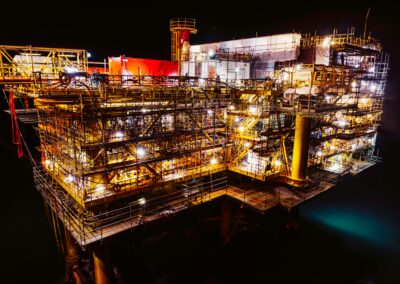
Photo by Dean Brierley on Unsplash.