
This blog was written by Rose Hansen, who recently completed a micro-internship with Oxford Net Zero’s Engagement Team.
From its inception, Oxford Net Zero has existed as a resource for companies who want to align themselves with the cutting edge of corporate sustainability practice. To do so, an intimate understanding of the phases of net zero governance landscape is required. These are the 1) voluntary initiatives; 2) orchestration campaigns; 3) standards; and 4) regulation that underpin corporate climate commitments. Traditionally, these four stages of commitment have been conceptualized as a “conveyor belt” moving from one discrete phase to the next, differentiated by degree of rigor and binding characteristics (Figure 1). While these terms are frequently used colloquially, each has a specific meaning when it comes to net zero governance. Voluntary initiatives like B Corp are at the frontier of best practice, experimenting with techniques for corporate sustainability. Consolidating those best practices, orchestration campaigns like Race to Zero facilitate industry-wide change. The first two stages are followed by standards, which are still voluntary but scale best practices globally. The final stage is regulation, led by governments to make the best practices binding. In this model, innovation is tied to voluntary initiatives which can be taken up by a small group, as opposed to regulation, which applies to all.
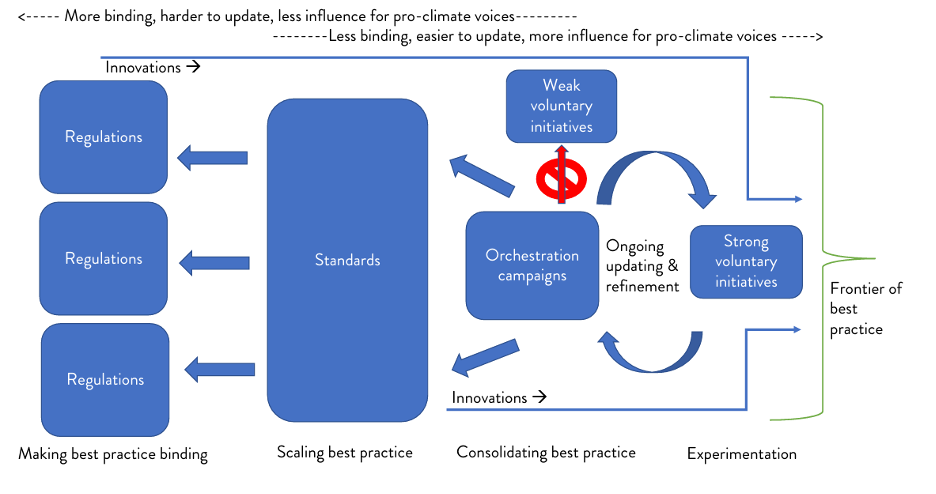
Figure 1: Thomas Hale (2022), “The Net Zero Governance Conveyor Belt”, Kleinman Center for Energy Policy.
Net zero governance has rapidly evolved since the birth of this model in 2021. At the time of its creation, the system helped to conceptualize how ideas moved from voluntary best practices towards regulation. This conception has proven useful when applied to several types of policies including public procurement and corporate disclosure. The Oxford Climate Policy Monitor describes the multitudinous definitions of sustainable procurement, placing procurement in the first phase of voluntary initiative. At the cutting edge of best practice, governments are “experimenting and evolving but have not yet converged around standard policy models or benchmarks.” Due to the nature of procurement, which is distributed over a wide geography and is affected by the fluctuations of availability and supply chains, regulation across jurisdictions is, in most cases, a long way off. In the meantime, procurement will continue through the stages of voluntary initiative towards orchestration campaigns.
Disclosure is another example of an idea that followed the traditional conveyor belt model from voluntary initiative to regulation. According to the Climate Policy Monitor’s Annual Review from 2025, 48 new disclosure policies were passed during the period of 2015 to 2025. These policies come as a progression from the strong voluntary initiatives like those of the CDP, formerly known as the Carbon Disclosure Project. While this project has generated international buy-in, regulation is a necessary final step of its evolution in order to make best practices for disclosure binding. Without regulation, the main motivation for disclosing, according to the CDP, is to demonstrate a company’s commitment to “tackling climate-related risks and opportunities, thereby enhancing [its] reputation.” While this may be an attractive proposition to a business, a shift in the reputational favorability of caring about the climate is sufficient to disincentivize the entire model of targets. Due to the susceptibility of the private sector to market-based trends, aspects of sustainability like disclosure are more suited to be managed at the governmental level, where change can be slower but more binding and long-lasting.
While these examples demonstrate the effectiveness of the conveyor belt model, there are assumptions involved that sacrifice the nuance of the net zero governance framework. This model is limited by the notion that each new idea begins with a voluntary initiative and gets consolidated necessarily into regulation. Instead, conceptualizing the process as an “elevator” reflects the reality of the situation. Sometimes, the elevator goes smoothly from the bottom floor to the top – but it can also move backwards, skip a floor, or pause on a certain stage. This model updates the classic conveyor belt idea by disrupting the notion that innovative thinking originates with voluntary initiatives and terminates in restrictive government policy. As opposed to a one-way conveyor, an elevator allows ease of movement and collaboration between floors. Moreover, the elevator suggests that regulation is not always the end goal of sustainability coordination efforts. With different initiatives reaching their best expression on different floors, the elevator model describes an ecosystem of sustainability tactics that complement one another.
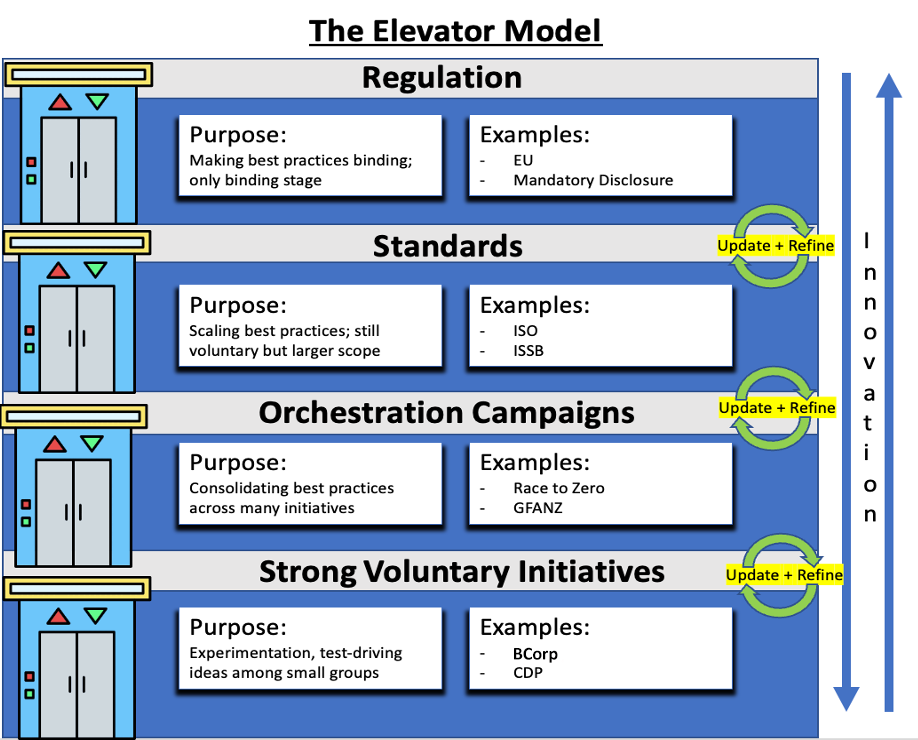
Figure 2: Reimagining of the conveyor belt as an elevator, Hansen 2026.
For some examples of the success of an “elevator” type model, we can turn to the California state legislature. Two acts in particular demonstrate the potential of this model. SB 253, the Climate Corporate Data Accountability Act, requires companies doing business in California that earn more than $1 billion to report their scope 1–3 emissions in accordance with the GHG protocol by August 2026, cutting down the voluntary nature of this action. This policy therefore takes an idea that has been tested by less binding bodies and elevates it directly to the “top floor” of legally binding government policy. By skipping the intermediary floors, the Californian state government has advanced corporate accountability efforts much faster than voluntary initiatives alone. SB 261 similarly requires all companies with revenue over $500 million to report their climate-related risks by following the guidelines of the Task Force on Climate-Related Financial Disclosures or another equivalent body. This initiative, signed into law in 2023, arose around the same time as the International Sustainability Standards Board (ISSB), whose formation was announced in 2021 at COP 26. Over time, the ISSB has worked to consolidate entities such as the Climate Disclosure Standards Board (CDSB), the Task Force for Climate-related Financial Disclosures (TCFD), the Value Reporting Foundation’s Integrated Reporting Framework, and the Sustainability Accounting Standards Board (SASB) into one comprehensive body. The passage of SB 261 around the same time as the publication of the ISSB demonstrates the elevator at work, moving fluidly between regulation, voluntary initiatives and standardization. While the conveyor belt model implies that state legislation is the end goal of the standardization effort, the ecosystem of net zero governance is vast, and in different jurisdictions there is a role for both top-down, government-led action and standardization initiatives that consolidate work from the bottom up.
Whether conceptualized as a conveyor belt or an elevator, this framework for change provides academics, students, policymakers, civil society and industry members with a shared language for sustainable transitions and systemic change. Either way, it is vital we recognize that innovation can come from anywhere, and that every individual and corporation has a role in the solution. However sleek, a model is only as useful as its applications. By coordinating across industries and sectors, the power of standards is in bringing diverse entities together towards a common goal – and we don’t have a moment to lose.
Photo by Markus Spiske on Unsplash.